


You Cannot Christianize the Dark
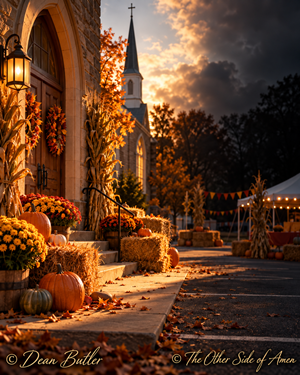
Halloween, fall festivals, and church compromise: Are Christians honoring Christ or becoming more like the world? A biblical call to discernment.
“Do not participate in the unfruitful deeds of darkness, but instead even expose them” (Ephesians 5:11).
Every October, churches start trying to figure out how close they can get to Halloween without calling it Halloween. They change the name. They call it a “fall festival,” “harvest party,” or “trunk or treat.”
They tell themselves that if the children are dressed like cowboys and princesses instead of witches and ghosts, somehow that makes it different. But changing the name does not change what is being celebrated. God has never told His people to see how close they can get to darkness without stepping all the way into it. His instruction is to walk in the light.
In Deuteronomy 18:9–12, God warned Israel not to imitate the detestable practices of the surrounding nations, including divination, sorcery, and consulting the dead. The passage does not mention Halloween, but it leaves no doubt about God's position on occult practices.
The problem is that the church has become very good at making excuses for things it ought to examine more carefully. We soften the language, change the decorations, put an event in a church parking lot, and convince ourselves that now everything is harmless. But darkness does not become light because a church sponsors it.
Some will say, “It is just for the kids. It is just candy. It is just fun.” But that is how compromise can begin. It rarely walks through the front door and announces itself. It comes in slowly, asking for one small exception and then another, until what once bothered us no longer bothers us at all.
Isaiah 5:20 warns, “Woe to those who call evil good, and good evil; Who substitute darkness for light and light for darkness.”
I am not saying a child wearing a cowboy hat is evil. I am saying the church has no business trying to dress up something rooted in darkness and call it Christian. There is a difference. We should be teaching our children discernment, not simply acceptance of everything the world celebrates. The world does not need the church to demonstrate that Christians can imitate its celebrations. The world needs the church to be different.
Paul asked, “What fellowship has light with darkness?” (2 Corinthians 6:14). His immediate subject was being bound together with unbelievers, but the contrast between light and darkness remains important. Christians should carefully examine what they are participating in and whether it honors the Lord.
The modern church has become so afraid of looking different that we keep trimming away the very things that make us different. We want people to feel comfortable. We want them to know we are not strange. We want them to see that Christians can have fun, too. But holiness has never been about fitting in.
There are churches today that will decorate for Halloween, dim the lights, play the music, hand out candy, and then tell themselves they are using it as an outreach. Maybe we should ask a harder question. Are we reaching the world, or are we becoming more like it? The answer will not be found in attendance numbers or how many children showed up. The answer has to be measured by Scripture.
Hebrews 5:14 reminds us that mature believers have their senses trained through practice “to discern good and evil.”
Discernment means we stop asking, “Can we get away with this?” and start asking, “Does this honor Christ?” That is a much different question. I know some Christians will disagree with me. That is fine. I am not interested in winning an argument over Halloween. I am interested in whether the church still knows how to say no to the world.
You cannot Christianize darkness by changing its name. You cannot make compromise holy by moving it into a church parking lot. And you cannot teach separation from the world while spending your time trying to look just like it. The church does not need a Christian version of Halloween. The church needs to be the light.
________________________________________________________________________
“What I write is not for everyone, but what I write is meant for someone.” – Dean Butler
This work may be shared for ministry or personal use, but please credit the author when doing so. © Dean Butler | The Other Side of Amen | theothersideofamen.com.
