


WHAT IF I AM WRONG?
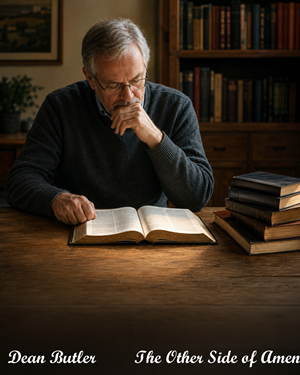
What if something you have always believed is wrong? Every Christian must examine their beliefs by Scripture and be willing to accept correction.
Most of us believe what we believe for a reason.
We may have learned it from our parents, a pastor, a church, a teacher, or a book. We may have heard it repeated so often that we never thought to question it. After years of believing something, it begins to feel settled.
But what if we are wrong?
There is nothing shameful about being wrong. Every believer has misunderstood Scripture at some point. We are still learning, still growing, and still being corrected by the Word of God.
The danger is not that we may be wrong. The danger is refusing to consider that possibility.
We should never be more loyal to what we have been taught than we are to what Scripture actually says.
The people of Berea were praised because they did not blindly accept everything they heard, even though the one teaching them was the apostle Paul.
“Now these people were more noble-minded than those in Thessalonica, for they received the word with great eagerness, examining the Scriptures daily to see whether these things were so” (Acts 17:11).
They listened, but they also examined the Scriptures. They wanted to know whether the teaching was true.
That should be the attitude of every believer.
We should not accept a teaching simply because it came from someone we trust. Good pastors can be wrong. Good churches can be wrong. Good teachers can be wrong. Even sincere believers can misunderstand the Bible.
Only the Word of God is without error.
The problem is that we often read Scripture through the filter of what we already believe. Instead of asking, “What does this passage say?” we ask, “How does this passage fit what I have already been taught?”
Those are not the same question.
When we begin with a belief and force every verse to agree with it, we are not allowing Scripture to teach us. We are using Scripture to defend our position.
Sometimes we read a passage and immediately decide what it cannot mean because it would disagree with our theology. We explain away the plain words, change the subject, or search for another verse that seems to support what we already believe.
At that point, we are no longer examining our belief by Scripture. We are examining Scripture by our belief.
Jesus warned about holding tightly to human teaching while setting aside the Word of God.
“Neglecting the commandment of God, you hold to the tradition of men” (Mark 7:8).
Tradition is not always bad. Much of what we have been taught may be true. But no tradition, church statement, study Bible, or system of doctrine has the right to stand above Scripture.
We must be willing to question every belief we hold.
That could apply to salvation, the church, spiritual gifts, baptism, the return of Christ, money, marriage, judgment, or any other doctrine.
The question is not whether a teaching is popular. The question is not whether our church believes it. The question is not whether our favorite preacher taught it.
The question is whether it agrees with the Word of God.
“Examine everything; hold firmly to that which is good” (1 Thessalonians 5:21).
We are not told to accept everything. We are told to examine everything.
That does not mean we should live in constant doubt or act as though truth cannot be known. God gave us His Word so that we could know the truth. But we must approach it with humility.
We must be willing to say, “Lord, if I am wrong, show me.”
That can be a difficult prayer because truth may require us to change. It may mean admitting that something we taught others was wrong. It may mean disagreeing with people we respect. It may even mean leaving behind a belief that once gave us comfort.
But truth is more important than comfort.
Jesus said, “If anyone is willing to do His will, he will know of the teaching, whether it is of God” (John 7:17).
Notice that willingness comes first.
A person who only wants God to confirm what he already believes is not seeking truth. He is seeking agreement.
The Holy Spirit will never lead us against the Word He inspired. He teaches us through Scripture, but we must be willing to listen. Pride, fear, tradition, and loyalty to a religious system can keep us from admitting what the Bible says.
None of us has reached the point where we no longer need correction.
The moment we believe we cannot be wrong is the moment we stop learning.
So open the Bible with an honest heart. Read the passage for what it says, not for what you need it to say. Examine the context. Compare Scripture with Scripture. Pray for wisdom. Be willing to let God’s Word tear down something you have believed for years.
There is no shame in saying, “I was wrong.”
The shame would be seeing the truth and refusing to accept it.
________________________________________________________________________
“What I write is not for everyone, but what I write is meant for someone.” – Dean Butler
This work may be shared for ministry or personal use, but please credit the author when doing so. © Dean Butler | The Other Side of Amen | All rights reserved.
