


WCHS Emergency Department: The Team You Count On When Every Second Matters
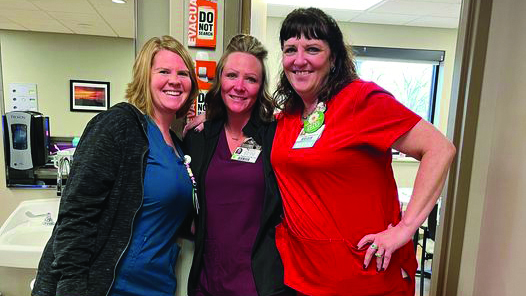
When someone in Weston County dials 911 or walks through the doors at Weston County Health Services, the people who step up first are the nurses, CNAs and providers in the Emergency and Outpatient Department. It is a small team, but it is a seasoned, highly trained one that carries a heavy load for the community every day.
“We run two RNs and one CNA every shift, and most days we add a 10–10 RN to help cover the ER,” said Donalda Bennett, director of acute care and nursing. “Those same nurses are also responsible for the inpatient acute care floor, so they move fast and they work well together.”
The department relies on 11 full-time RNs and one PRN to staff its 12-hour day and night shifts. Four full-time CNAs and four PRN CNAs support the roster. After a period of heavy reliance on travel staff, the department is nearly fully staffed again. Only one short-term travel CNA remains while a new hire completes training.
Always Covered, Always Ready
Emergency-room providers work immersive shifts — 24 to 48 hours at a time, with the occasional 72-hour stretch — and are in the facility around the clock. Four regular providers anchor the schedule, supported by two locums and one PRN provider.
The ER includes four treatment spaces. Two are fully equipped trauma bays, and two are regular rooms for less severe emergencies.
With imaging and lab services located nearby, patients get testing fast unless the department is experiencing a surge.
“We average about five emergency patients per day, but we can see up to 12 or 14,” Bennett said. “There are days when every room is full and we are using the inpatient floor for overflow.”
Between November 2024 and November 2025, the team treated 2,087 ER patients.
Training That Matches Big-City Standards
All emergency-department nurses maintain certifications that exceed standard licensure requirements.
CPR
Advanced Cardiac Life Support
Trauma Nursing Core Course
Pediatric Advanced Life Support
Emergency Nursing Pediatric Core Course
Neonatal Resuscitation Program
OB emergency programs
In September, that readiness paid off when WCHS completed its State Trauma Survey and earned full trauma-program status.
“Our trauma coordinator, Tamie Dowding, did an exceptional job getting the facility prepared,” Bennett said. “Achieving full status reflects the work and the skill across the entire team.”
Outpatient Services That Keep People Close to Home
The Emergency Department also handles a wide range of outpatient procedures so patients can stay close to home.
Wound care.
IV medications and fluids.
Weekly, monthly and annual injections.
Chemo pump discontinuation.
Provider-ordered procedures.
Cardiac rehabilitation also operates within the department, offering Phase II and Phase III programs.
Phase II Cardiac Rehab
Cardiac monitoring plus vital signs during exercise.
One to two sessions per week (36 total).
Treadmills, NuStep machines and stationary bikes.
Covered by Medicare, most insurance plans and VA with preauthorization.
Phase III Cardiac Rehab
Self-pay: $10 per session.
Vital signs taken, but no cardiac monitoring.
Allows patients to continue supervised exercise after completing Phase II.
A Department Built on Commitment
The WCHS Emergency and Outpatient Department is small, but it is built to
deliver. Every patient who arrives gets a team ready to respond, and every
service — from trauma care to injections to cardiac rehab — is supported by the same group of nurses and providers who keep the county’s only hospital running at all hours.
“We are proud of the team we have here, and proud of the care we provide,” Bennett said. “This community depends on us, and we take that seriously.”