


Sandpiper Fire equals concern for 2026
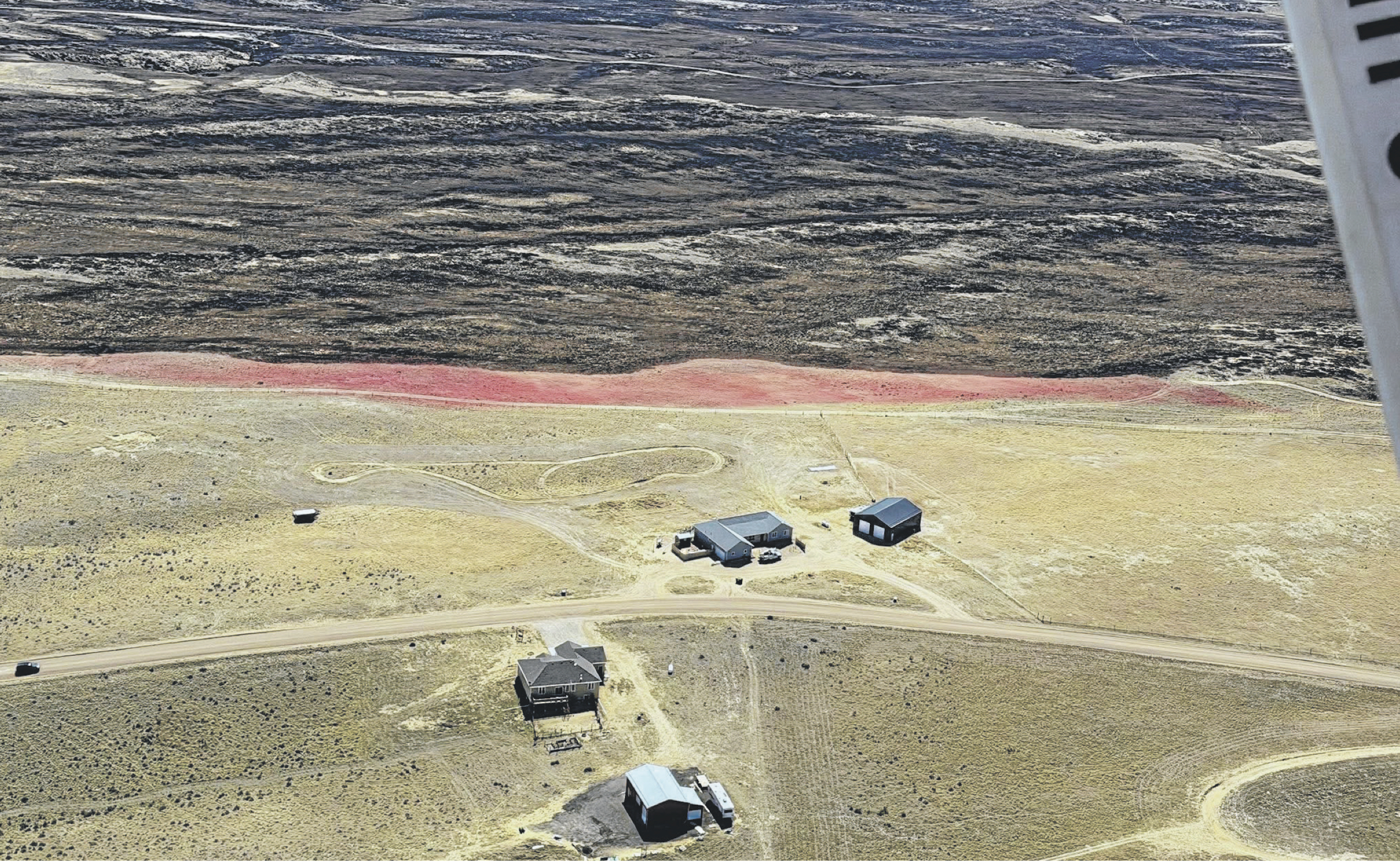
Fire has been contained, but it's already burned more than all fires in Natrona County in 2024 combined
CASPER — "It's going to be a tough wildland season," Natrona County Fire District spokesman Leighton Burgen said Monday.
In 2024 — a year described to the Star-Tribune by some firefighters as the worst they'd ever seen — the largest fire recorded in Natrona County burned a little under 1,600 acres, according to the National Interagency Fire Center.
The Sandpiper Fire, which was contained fully Saturday, clocked in a burn area of more than 6,200 acres, mostly within Natrona County with some spread to neighboring Converse County.
In the 2024 calendar year, only 3,921 acres burned in the county, according to a Natrona County Fire District news release from January 2025.
"To have a fire this large this early in the season is going to raise a lot of concern for this summer," Burgen said.
The Sandpiper Fire
Natrona County fire officials on Saturday said the wildland fire northeast of Casper is now contained.
As of Monday morning, a joint task force of city, state and county fire officials were still investigating the cause of the fire, Burgen said.
Burgen added that the Sandpiper Fire was a relatively "complete burn," meaning there were few residual fuels on land burned by the blaze.
Aircraft mapping has placed the blaze at approximately 6,287 acres. Ground crews are currently verifying and refining those numbers, according to a Natrona County Fire District Facebook post Saturday morning.
Burgen confirmed that figure again Monday.
The fire spread to nearby Converse County. Fire crews there continued containment work Saturday "with no visible smoke column at this time," officials said.
Some fire units and personnel remain at the scene.
"Natrona County Road & Bridge crews provided critical assistance in constructing containment lines," according to the post. "The entire Natrona County portion of the fire now has established lines around it."
There were no reported injuries—both from fire personnel and civilians—and no homes or other structures were lost.
Officials said on Saturday said interior pockets will continue burning so light smoke may still be visible.
The fire was reported shortly before 3 p.m. Friday, and officials quickly advised evacuation of the immediate area of Sandpiper Street off Cole Creek Road. Natrona County Sheriff's deputies went door to door and alerted residents.
Soon, evacuation notifications were made for residents on Castle Stone Drive, Stonewood Street and Ridgeview Road.
Only about 50 acres had burned late Friday afternoon. That estimate was increased to around 2,000 acres soon after, according to the Interagency Fire Center.
Winds clocked at more than 35 mph.
Authorities reopened Cole Creek Road shortly before 7 p.m. Friday.
The cause of the fire remains under investigation.
"Firefighters continue to remain in the area, actively monitoring the fire and mopping up interior hot spots," fire officials said Saturday afternoon.
The year ahead
It's no secret the historically warm and dry winter of 2025 has worsened Wyoming's outlook for the upcoming fire season.
Exactly how tough it looks right now is difficult to overstate, based on the word of fire officials and publicly available weather data.
When asked how this year looks compared to 2024 — among the worst in Wyoming's history, with more than 800,000 acres burned — Burgen had a simple answer.
"Worse," he said without pause.
Data from the National Weather Service shows the last time Wyoming saw a January this dry was in 2015.
Based on average temperature, 2025-2026 was the warmest winter in Wyoming history.
Nationally, the outlook has similarly been pessimistic. The National Interagency Fire Center reports that 2026 has seen the most fires through March 20 since at least 2016, at 12,979.
That's narrowly ahead of 2022, more than 1,000 ahead of 2024 and more than 5,000 above the 10-year average.
"Everything is leading up to being worse than 2024," Burgen said.
That data also shows that fires have burned the third-most land by acreage in that span.
The county fire district is also considering mitigating measures like restricting vacation time for firefighters and even cutting deployments to federal fires.
That has the added negative effect of cutting a major revenue stream for local departments, as responding departments are compensated when assisting on federal fires.
"We can't afford to send anybody out because we need to take care of our home," Burgen pointed out.
The outlook is built off projections, which obviously change as new data is made available or conditions change, something that Burgen emphasized. But short of a massive shift in weather trends, 2026's outlook is not good.
That's also reflected by deployment trends across the country, he added.
"We're already seeing a ramp-up in resources being acquired to pre-position for future fires," he said.
As for this spring?
"Pray for rain," Burgen said.
This story was published on March 24, 2026.