


Remembering 9/11 — History in the making
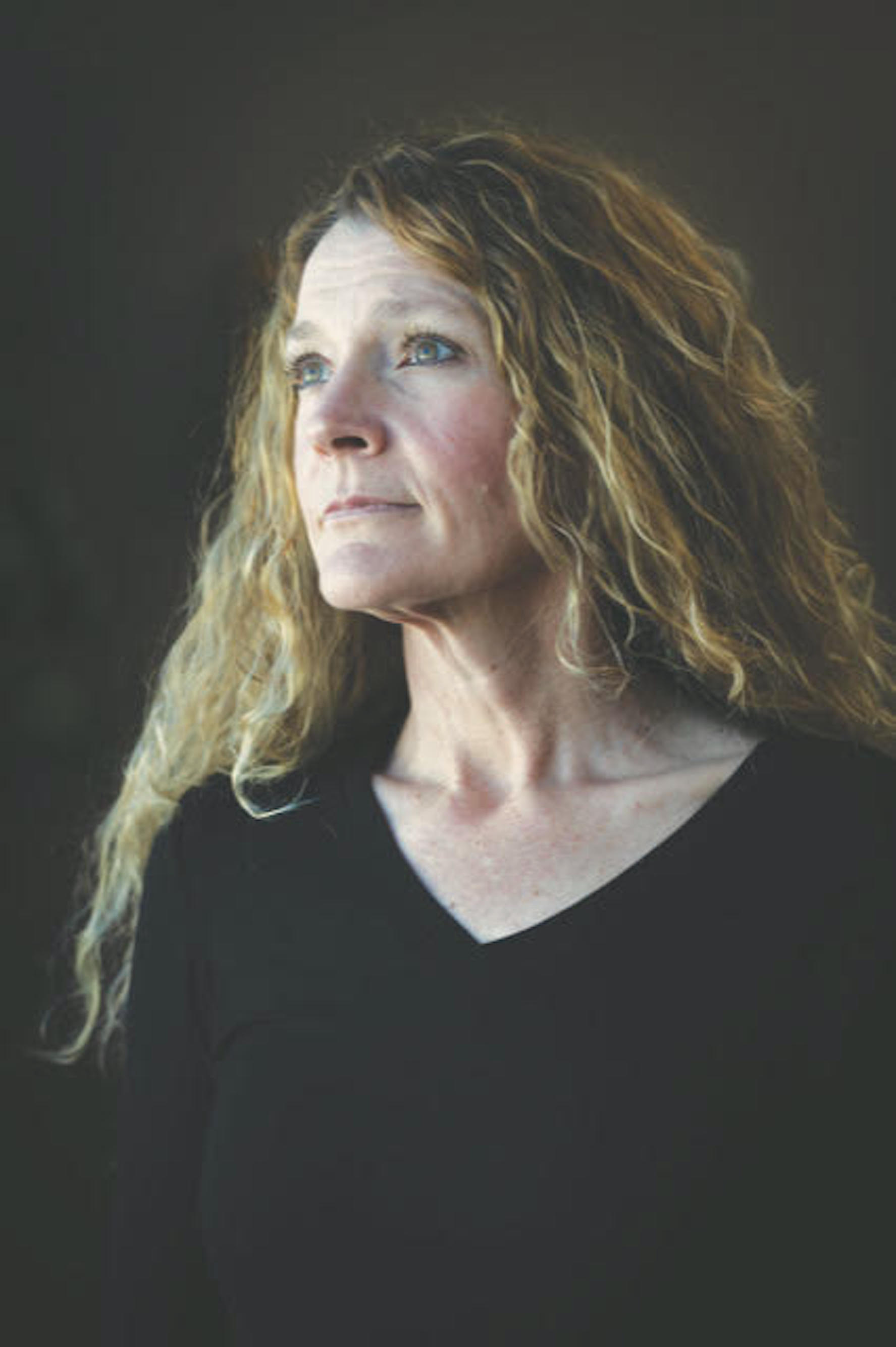
Kathy Camino is a social studies teacher at Clear Creek Middle School. Each year on Sept. 11, Camino teaches her students about the events of that day in 2001. Photo by Joseph Ciembroniewicz, Buffalo Bulletin.
BUFFALO — Kathy Camino was home on bedrest, awaiting the birth of her twin daughters on Sept. 11, 2001. That morning, she made herself a cup of tea and turned on the Today Show, which was showing footage of a plane striking the North Tower.
“At that point, everybody just thought it was a freak accident,” Camino said. “So I got my cup of tea and continued to watch. And when the second tower was struck, we knew that it wasn’t an accident. From that point on, I think I, like every other American, was glued to the TV, not knowing how many more times this is going to happen, how many more planes are going to be used as weapons against our own people, not knowing who was behind it or what their motivations were.”
On the morning of Sept. 11, 2001, four commercial airplanes were hijacked by members of al-Qaida. Two were flown into the World Trade Center towers in New York City, a third struck the Pentagon outside Washington, D.C., and a fourth crashed in a field near Shanksville, Pennsylvania, after passengers and crew attempted to regain control. Nearly 3,000 people were killed in the attacks.
Camino, who teaches social studies at Clear Creek Middle School, said that while the events that unfolded that fateful morning lasted hours, the changes they set in motion have lasted for decades.
As the morning unfolded, the South Tower collapsed at 9:59 a.m., followed by the North Tower at 10:28 a.m. The images were broadcast live across the country, giving millions of Americans a real-time view of an event that would become one of the defining moments of the early 21st century.
“It’s one of those turning points in American history,” she said. “I wasn’t alive when Kennedy was assassinated, but people who were can tell you exactly where they were when they found out, and people can tell you where they were on 9/11. Things didn’t really feel the same for people after that. I think we felt more vulnerable, and that did make an impact on us in a historic way.”
In the immediate aftermath, Camino said, two currents emerged: a surge of patriotism and unity, and a sense of unease as people watched and waited to see what would happen next.
“I was about to become a mother. I was less than two weeks from bringing my twins into the world, and I was terrified of what was going to happen next,” she said. “Since Pearl Harbor we had not been attacked on our own soil. The not knowing what was going to happen next. I think everybody was kind of holding our collective breath and hoping that something else wasn’t going to happen. We were a nation in mourning, but also a nation that came together, and there was a feeling of unity.”
As a social studies teacher, Camino marks the anniversary of 9/11 each year by teaching her students about the attacks. For Camino, who lived through Sept. 11, 2001, the day remains a vivid personal memory. But 25 years later, she now finds herself teaching the historical event that she experienced in real time.
“I think there’s still enough people in (students’) lives who, whether it be grandparents or parents, have been able to give them some of their own stories, and say, ‘I remember where I was that day,’” she said. “When you can tie it to something that someone that you love and care about has shared with you, it makes information more relevant, and it makes you pay attention more and say maybe I need to know more about that.”
Camino said the extensive live coverage of Sept. 11 provides a wealth of primary-source material she can use to help students understand how the attacks unfolded and how Americans reacted in real time. She is careful, however, to choose images that are appropriate for middle school students.
For those who watched the events unfold live on television, some of the most haunting images are of people jumping from the burning World Trade Center towers. Camino said those images are not ones she shows in class.
Camino also supplements the instruction with published first-hand accounts from first responders, survivors and witnesses. She also uses virtual tours of the National 9/11 Memorial and Museum in New York City.
“It helps them understand the complexities,” she said. “For the kids to hear different people and hear their voices and where they were. The tone with that, it is somber, and the kids are very respectful.”
As with all of her history instruction, Camino said it’s important that kids are able to answer the
“five Ws” to understand any historical event: who, what, where, when and why.
Answering “why?” is no doubt the most fraught part of the conversation.
“Kids tend to know quite a bit more than we give them credit for, so they do have questions,” she said. “We talk about different ideologies, and how people have different values. But in terms of my instruction in the classroom, I’m not going to get into (anything more) at the middle school level.”
Despite the passage of time, Camino said teaching about 9/11 still affects her.
“I talk about it all day with kids, and my eyes sting all day long,” she said.
This story was published on Sept. 10, 2026.
Ensure These Stories Are Told
Despite the challenges facing independent local journalism, what sustains us — and fills us with deep gratitude — is the loyal support of readers who believe our communities deserve accurate, trusted, and locally rooted news.
It is no exaggeration to say that we are here because of you. Every story we report, every local issue we follow, every public meeting we cover, and every community voice we lift up is made possible by readers who understand the value of an independent newspaper.
Your support does more than fund articles. It helps protect the independence that allows us to report honestly, ask important questions, and keep our community informed without fear or favor.
If you are able, please consider supporting the News Letter Journal by donating to our Unabridged Fund today. Whether your gift helps cover reporting time, printing costs, video, photography, editing, or distribution, every contribution helps keep local journalism strong in Wyoming.
All gifts are deeply appreciated. Your support helps ensure that local stories continue to be told, local decisions continue to be watched, and local voices continue to be heard.
Thank you for standing with independent community journalism.