


How Infrastructure Impacts the Trucking Industry
Every fleet manager and owner-operator knows that a well-maintained rig is essential for success. But even the newest, most high-tech Class 8 truck is entirely at the mercy of the pavement beneath its tires.
This kind of infrastructure and more isn’t just a topic for politicians debating spending bills; it is a daily reality that directly affects the bottom line of every carrier on the road. If you’d like to learn more about how general infrastructure impacts the trucking industry on a daily basis, this quick guide is just for you.
Road Quality and Maintenance
Let’s talk about the most immediate impact: the road surface itself. Poor road conditions might seem like a minor annoyance, but over time, they will lead all semis directly to the repair shop. Constant vibration from uneven surfaces, potholes, and cracks accelerates wear and tear on suspension systems, tires, and alignments.
For a fleet, these maintenance costs add up aggressively. Replacing a blown tire caused by debris or a deep pothole is expensive, but the downtime is often worse. Beyond the repair bills, bad roads force drivers to slow down significantly to avoid damage. These forced speed reductions lead to delivery delays that can frustrate customers and disrupt tight “just-in-time” supply chains.
Bridges and Overpasses
It is not just the surface of the road that matters; the structures connecting them are equally vital. Structurally deficient bridges pose a serious routing headache for heavy haulers. When a bridge is weight-restricted due to age or damage, trucks are forced to take long, inefficient detours. This adds unnecessary mileage and time to a route, burning more fuel and eating into the driver’s available hours.
Furthermore, low clearances on older overpasses—built for a different era of vehicles—are also a hazard that drivers must avoid. Striking an overpass will cause catastrophic damage to equipment and infrastructure, leading to massive insurance claims and route closures.
Traffic Congestion
Nothing kills fuel efficiency quite like idling in gridlock. Outdated road networks that haven’t kept pace with population growth create massive bottlenecks, particularly around major metropolitan logistics hubs. When a driver is stuck in bumper-to-bumper traffic, fuel consumption spikes while productivity plummets.
In an industry where margins can be tight, sitting still can get expensive fast. Congestion forces dispatchers to pad delivery windows, reducing the total number of loads a truck can move in a week. It turns a profitable route into a break-even struggle, simply because the road capacity isn’t there to handle the volume.
Rest Stops and Facilities
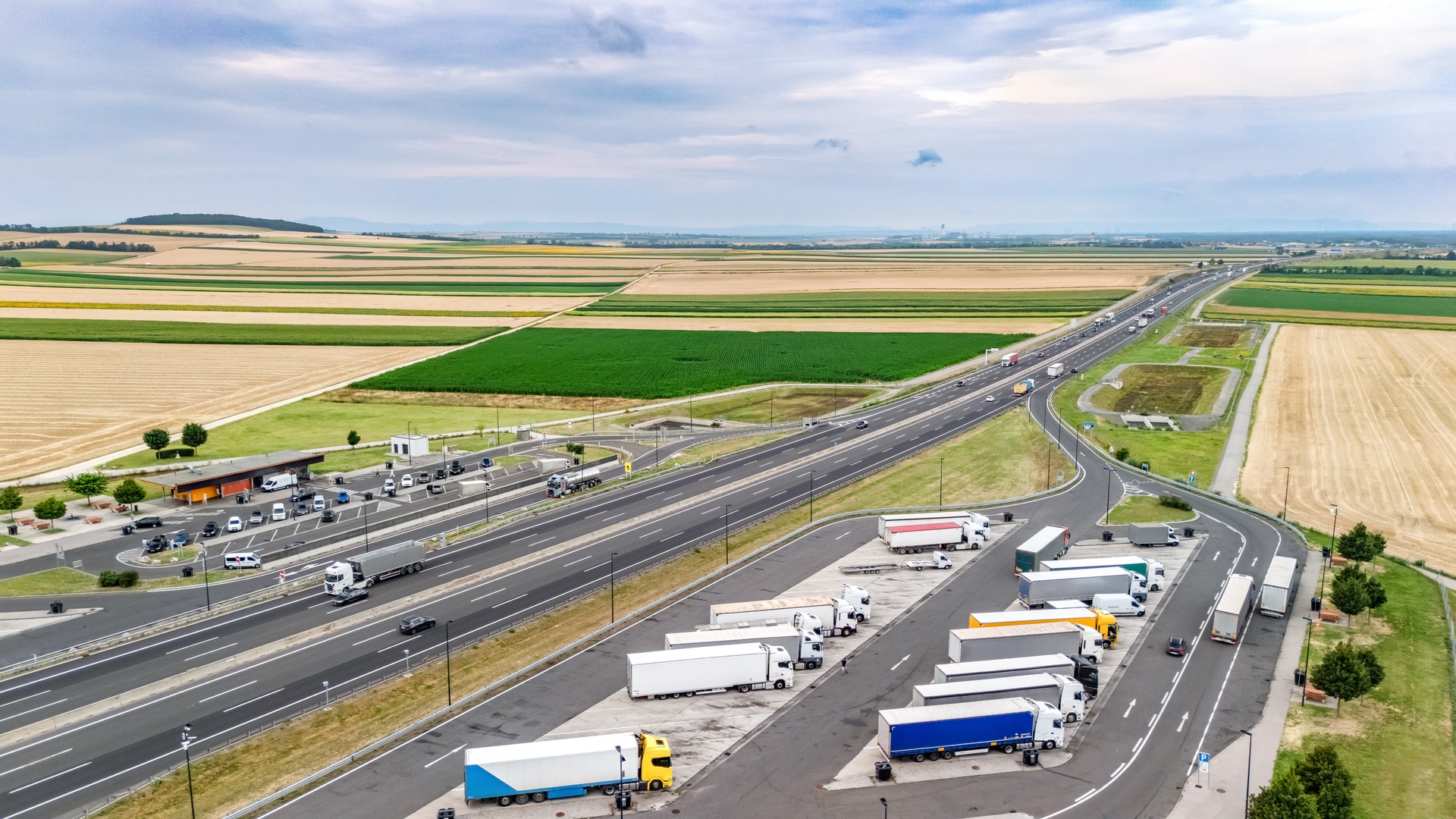
Something that’s important to note is that infrastructure’s impact on the trucking industry isn’t just about roads; it is about the places they stop as well. Many truck drivers must navigate the challenges of finding parking every night due to a chronic shortage of safe, well-maintained semi-truck parking lots. When dealing with strict hours-of-service (HOS) regulations, finding a legal and secure place to park when the clock runs out isn’t easy.
This lack of proper facilities forces drivers into a stressful game of musical chairs every night. When lots are full, drivers are often forced to park on dangerous highway shoulders or exit ramps. Expanding the network of rest stops with adequate amenities is critical for driver safety, compliance, and overall job satisfaction.