


Glenrock residents up in arms over Flock cameras
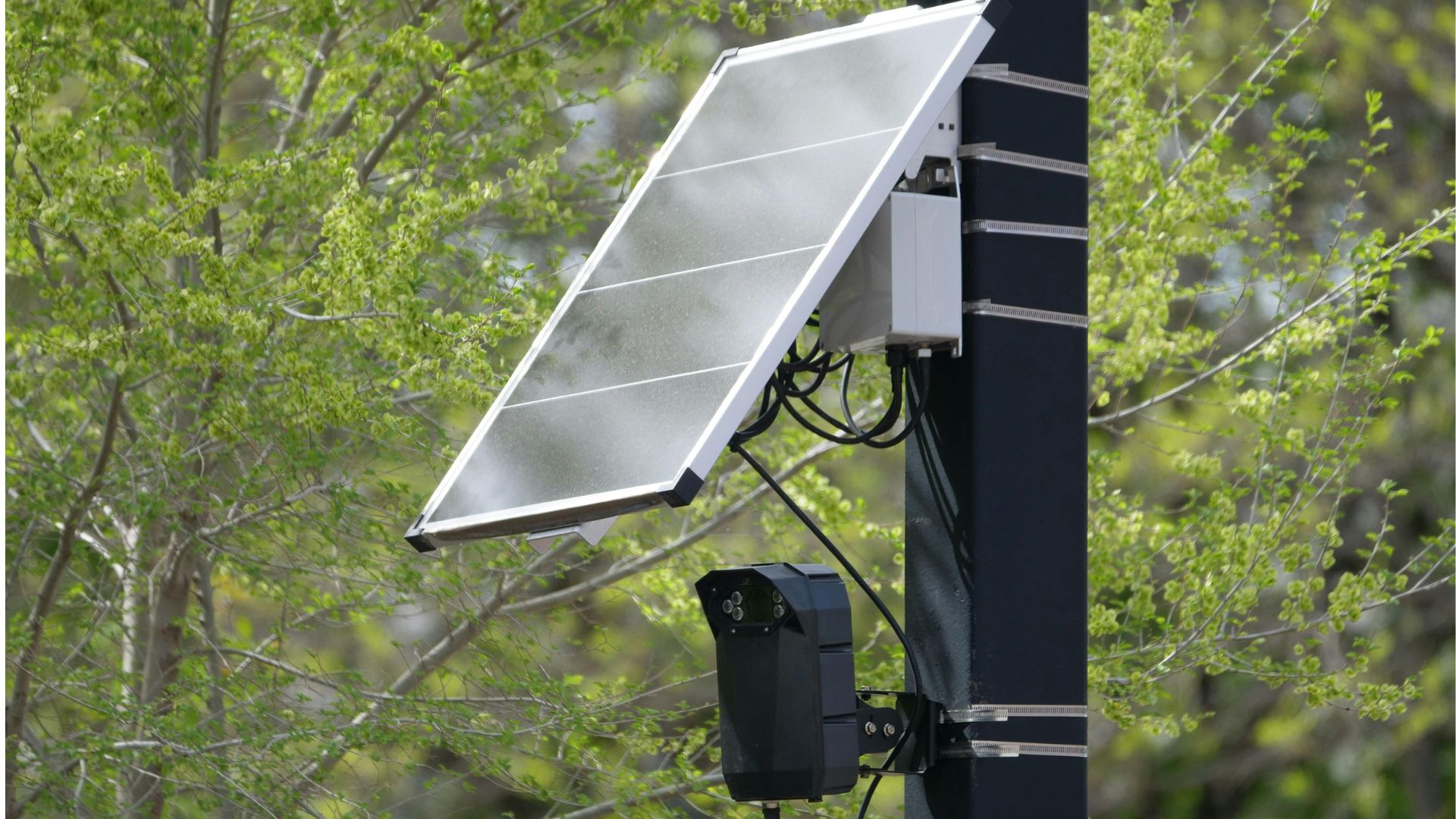
DOUGLAS — After being in place for two years, four Flock cameras on the edges of Glenrock and one in Rolling Hills have caused a furor among residents.
The cameras, after Flock brand and automated license plate readers in general came to national attention, have caused Glenrock residents to demand answers from Police Chief Colter Felton and the Glenrock Town Council.
They were approved in a public budget hearing — not a regular council meeting – two years ago. The camera in Rolling Hills went before a regular session of that town’s council, according to Felton.
The cameras cost about $3,000 annually per camera, not including an installation fee.
The Glenrock Town Council on Aug. 10 proposed a work session with themselves, Felton and the public to help assuage fears and concerns spreading on social media. The meeting was scheduled for Aug. 25.
Jack Smalls, a Glenrock resident, calmly spoke in front of council Aug. 10 to express concerns of his and others in the small crowd.
The Flock cameras in Glenrock take pictures, not video. Every vehicle that passes gets a picture of its license plate taken. Pictures are retained for 30 days per Glenrock’s usage policy.
Many of the details or settings can be adjusted to an individual department’s policy, and Glen- rock’s policy is publicly available on the town’s website, along with an FAQ from the company.
Officers can look up a car by plate, partial plate, or a description — for example, an officer could search “black truck” for a given time frame.
The system does identify features broadly, such as a camper, bumper stickers or a roof rack. Officers cannot look up details more specific than that, and Glenrock PD cannot search “Trump sticker” or “Biden sticker,” just “bumper sticker” more generically. The cameras, which are Falcon models, do not pick up faces well and are not equipped for facial recognition. Felton did a short demonstration using his own police vehicle as an example.
“We can’t use it for traffic enforcement,” Felton said. “We can’t use it for harassment or intimidation, usage based solely on a protected class such as sex, religion, any of those kinds of things, or any non-law enforcement or personal use.”
Every search is logged with a case number and the officer who used it. When Felton runs the audit, which is updated on Glenrock’s website and available as a public record, they redact the license plate searched, to protect the privacy of those who may be suspected of a crime.
Balancing the investigative tool and the public’s privacy is from the front page on Felton’s mind, he said. There have been multiple examples nationwide of officers abusing the system for personal or suspect reasons, including a case in Florida of a deputy tracking a woman he met on a film set, then pulling her over in a traffic stop to ask her out.
Searches require a case number or the test function, which shows up as a test on an audit. They use the “test” case number to periodically check the cameras, but also in training situations. Felton said they use police vehicles during those tests.
The audits are available on Glenrock’s website under the police department section. Additionally, Felton said he is aware of the concerns of the citizens, so he’s made himself available to answer questions. He wants to use the system as transparently as he can, but he maintains that if the city council votes to remove it, or the Supreme Court deems ALPR systems unconstitutional, local law enforcement will take the cameras down.
Still, citizens have questions. Some see the redactions as a lack of transparency from Glenrock and are still looking for answers. Glenrock has seen officers investigated in the past, although it’s been some time, and not since Felton has been chief.
“I’ve lived here in Glenrock for a lot of years,” Smalls said. “I went to school here in Glenrock, and I know for a fact how many cops that got arrested or fired or thrown in jail for heinous crimes. So I can’t trust our system for being anywhere remotely close to being honest.”
This story was published on August 26, 2026.
Ensure These Stories Are Told
Despite the challenges facing independent local journalism, what sustains us — and fills us with deep gratitude — is the loyal support of readers who believe our communities deserve accurate, trusted, and locally rooted news.
It is no exaggeration to say that we are here because of you. Every story we report, every local issue we follow, every public meeting we cover, and every community voice we lift up is made possible by readers who understand the value of an independent newspaper.
Your support does more than fund articles. It helps protect the independence that allows us to report honestly, ask important questions, and keep our community informed without fear or favor.
If you are able, please consider supporting the News Letter Journal by donating to our Unabridged Fund today. Whether your gift helps cover reporting time, printing costs, video, photography, editing, or distribution, every contribution helps keep local journalism strong in Wyoming.
All gifts are deeply appreciated. Your support helps ensure that local stories continue to be told, local decisions continue to be watched, and local voices continue to be heard.
Thank you for standing with independent community journalism.