


Called to serve — Drafted into service, guided by faith
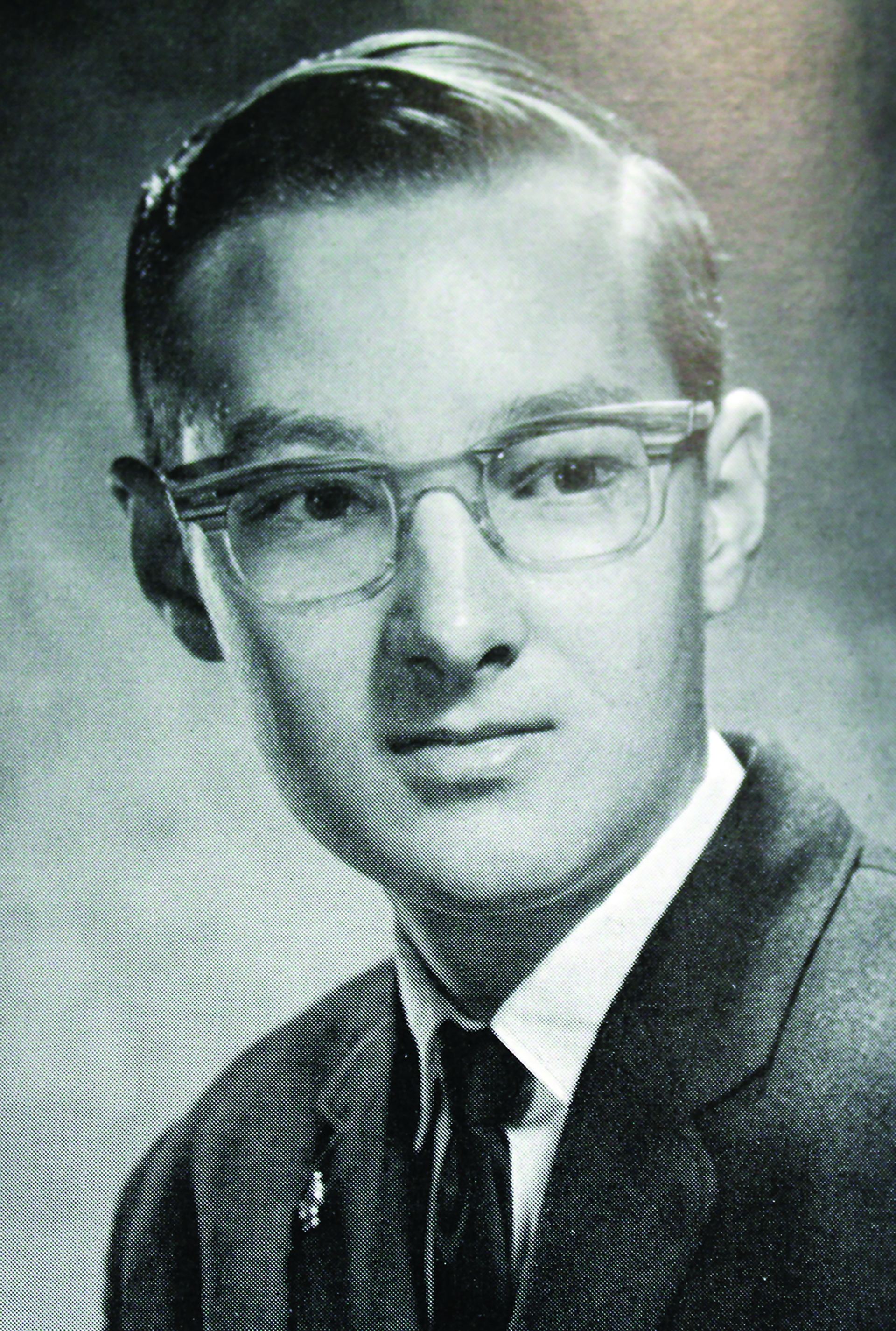
Photo from Newcastle High School Yearbook, Class of ‘66 Louis Anderson, 1966 Newcastle High School graduate, was drafted into the U.S. Army and trained as a medic. He served in Berlin, Germany, and says his time in the service strengthened his faith. He is now a minister in Colorado.
For Louis Anderson, a minister in Colorado, the path to the ministry began long before the U.S. Army drafted him from his small hometown in Weston County.
By the time Anderson left Newcastle High School in 1966, he already knew what he wanted to do with his life. At about 14, he said, he felt called to ministry. Church had been a constant throughout his childhood, and his pastor, Bill Carroll, also helped shape that calling.
“I have always gone to church,” Anderson said. “The only time I missed from the day I was born to the time I left to go to college was a couple of times, and that was because my mom was in the hospital.”
After high school, Anderson left Newcastle for college in Portland, Oregon, where he studied to become a pastor. Then, in 1970, the U.S. Army interrupted those plans.
“I was drafted,” Anderson said. “I didn’t choose the Army, but the Army chose me.”
Anderson was sent to Berlin, Germany, where he served during the Vietnam War era and trained as a medic.
“I think I went to Germany because I took the place of someone who went to Vietnam,” he said. “I don’t know if that is true or not, but that is what I always thought.”
His time in the military did not pull him away from his faith. If anything, Anderson said, it strengthened it.
“I am not sure I can articulate how,” he said. “It reaffirmed my faith. I think it is a contributing factor for my whole career.”
One person who helped him maintain that connection was a Methodist chaplain named Chapman.
“He preached the Bible, even in a military setting,” Anderson said. “He was pretty faithful in preaching the Bible.”
Sunday chapel services became an important part of Anderson’s time overseas.
“It gave me a break from the barracks,” he said. “Gave me the opportunity to grow my faith.”
The experience also gave Anderson a perspective on life he had not encountered while growing up.
“I think that experience enhanced my experience as a minister,” he said. “I saw a side of life — I mean I was pretty sheltered growing up — it was something I had never seen.”
While Anderson was serving in Germany, the person who would become his wife, Ilene, was back in Portland. The two had met in college, where Anderson had been her brother’s roommate. They attended the same church, and their relationship grew from there.
When Anderson learned he would be drafted, Ilene was disappointed.
“I was a little upset,” she said. “My goal when I went to college was to get my Mrs. degree. This meant that I would have to wait longer to get that.”
She had hoped they would marry before Anderson left so she could accompany him to Germany. She also had family there, but Anderson was not ready to rush the wedding.
The night before he left, however, he proposed.
The couple went to dinner at a restaurant fitting for the occasion in Portland.
“I don’t really call attention to myself by getting down on one knee, so I sat across the table and asked her, ‘Will you marry me?’” Anderson said.
Her answer was simple.
“I wouldn’t want to marry anyone else,” Ilene said.
The following months were sustained by letters. Ilene wrote to Anderson every day, and he responded in the same fashion.
“It meant we connected,” Anderson said. “It kept me informed on what was going on in her life.”
Ilene stayed busy with school, work and choir while Anderson served overseas. She also preserved pieces of the time they spent apart in a book filled with newspaper clippings, pictures and other things Anderson sent home.
When Anderson returned to the United States in March 1972, he stopped in Newcastle to see his parents before continuing to Portland to reunite with Ilene.
By August, the couple was married.
For Anderson, coming home marked the beginning of the life he had been preparing for before the Army intervened. He returned to seminary in Portland and used the GI Bill to pay for his education.
“I’ve always said, ‘that’s the first time I played the lottery and lost,’” Anderson said. “But, I didn’t lose, I won! I got out of the military and went to the ministry on the GI bill and graduated completely debt free.”
Ilene remembers that financial benefit as one of the unexpected positives of Anderson’s service.
“One nice thing about him being in the military, he was able to come home and pay for his seminary,” she said. “That was a big thing. We were broke college kids.”
More than 50 years later, Anderson can see how the unexpected detour became part of the life he was meant to live. His military service did not replace his calling to ministry. Instead, it became part of it.
For Anderson and Ilene, the story became one of patience, faith and a relationship that endured separation before marriage.
Anderson entered the Army because, as he put it, the Army chose him.
He left it with a deeper faith, an education made possible by the GI Bill and a wife waiting for him in Portland.
Ensure These Stories Are Told
Despite the challenges facing independent local journalism, what sustains us — and fills us with deep gratitude — is the loyal support of readers who believe our communities deserve accurate, trusted, and locally rooted news.
It is no exaggeration to say that we are here because of you. Every story we report, every local issue we follow, every public meeting we cover, and every community voice we lift up is made possible by readers who understand the value of an independent newspaper.
Your support does more than fund articles. It helps protect the independence that allows us to report honestly, ask important questions, and keep our community informed without fear or favor.
If you are able, please consider supporting the News Letter Journal by donating to our Unabridged Fund today. Whether your gift helps cover reporting time, printing costs, video, photography, editing, or distribution, every contribution helps keep local journalism strong in Wyoming.
All gifts are deeply appreciated. Your support helps ensure that local stories continue to be told, local decisions continue to be watched, and local voices continue to be heard.
Thank you for standing with independent community journalism.