


Wyoming rolls out $205M to boost rural healthcare amid steep cost challenges
FROM WYOFILE:
Providers can apply for Trump administration funds for Wyoming projects through early August. Healthcare advocate cautions about potential for waste, fraud and abuse.
The Wyoming Health Department is inviting hospitals, emergency responders, education programs and other healthcare services to apply for their share of $205 million in federal funds to address gaps in the state’s fragile rural health system.
Applicants can use the Rural Health Transformation Program funds in Wyoming to create physician residency positions; pool emergency medical resources; prioritize basic hospital services; or implement a statewide telespecialist platform.
The large injection of money holds enormous promise for bolstering emergency care, hospital viability, workforce development and healthy lifestyles in a state that faces acute rural healthcare challenges, advocates say.
“These practical and common-sense steps have a clear goal: to help Wyoming families live healthier lives and to make healthcare more affordable,” U.S. Sen. John Barrasso, a Wyoming Republican, said in a June statement. “Fundamentally, it is about delivering care to people when and where they need it the most.”
Wyoming’s approved proposals are designed to improve access to basic care. Federal administrators, however, denied a major initiative in Wyoming’s initial application, stripping the state of its ability to fund healthcare programs in perpetuity. And in a state with some of the highest health insurance costs in the country, the federal funds aren’t expected to have a direct dent in residents’ ability to afford coverage.
Healthcare access advocates also worry about the abbreviated timeline. Wyoming applied for funds in November, was awarded the $205 million in May and opened its request for proposals July 1. Those applications close by Aug. 3, and once the state makes selections, participants have to obligate funding by the end of October. Participants will then have until September 2027 to expend costs and activities.
“My concern is this amount of funding being pumped into the healthcare economy in Wyoming over a very short period of time creates opportunities for money to fall through the cracks, creates opportunities for people to create waste, fraud and abuse,” said Healthy Wyoming Executive Director Jenn Lowe. “The timeline is so fast.”
The opportunity
The Rural Health Transformation Program is a federal initiative created by President Donald Trump’s 2025 One Big Beautiful Bill Act. The program will funnel $50 billion to states over five years to stabilize and strengthen rural hospitals and providers. It aims to offset a portion of the federal funds for healthcare cut by the same legislation.
The application process for states unfolded in about two months last fall. Wyoming Department of Health gathered input via stakeholder conferences, public meetings and an online survey. Using that input, department staff drew up an application.
The document identified four main areas for Wyoming improvements: access to emergency medical care, rural workforce supply, health technology transformation and “Make Wyoming Healthy Again.”
Specific initiatives it proposed include forging cooperative agreements for EMS agencies to work on a regional basis, funding educational awards related to clinical tracks and standing up a state-managed health insurance program dubbed “BearCare.” The state also proposed establishing a so-called perpetuity — a system of investments that could generate revenue for Wyoming healthcare programs indefinitely, according to the application.
When federal administrators with the Centers for Medicare and Medicaid Services approved Wyoming’s application in December, Wyoming got $5 million more than it requested and received the second-largest award per capita, behind Alaska.
However, when Wyoming health department staff negotiated with the federal agency on the application’s fine points this spring, the perpetuity pitch did not pass muster. The state removed it from its final application.
That left Wyoming without two of its core proposals. The state also ditched the state-operated public insurance plan after legislators frowned on the idea.
Despite that, healthcare providers and advocates celebrated the opportunity to inject millions into programs that could prop up rural hospitals, workforce and preventative health measures.
The $205 million is for the state’s Year 1 application to the fund. Wyoming stands to receive hundreds of millions more through 2030 from the initiative.
Wyoming began accepting applications last week. Eligible entities include hospitals, clinics, telehealth platforms, transportation coordinators and fiscal agents.
A roadshow and task force
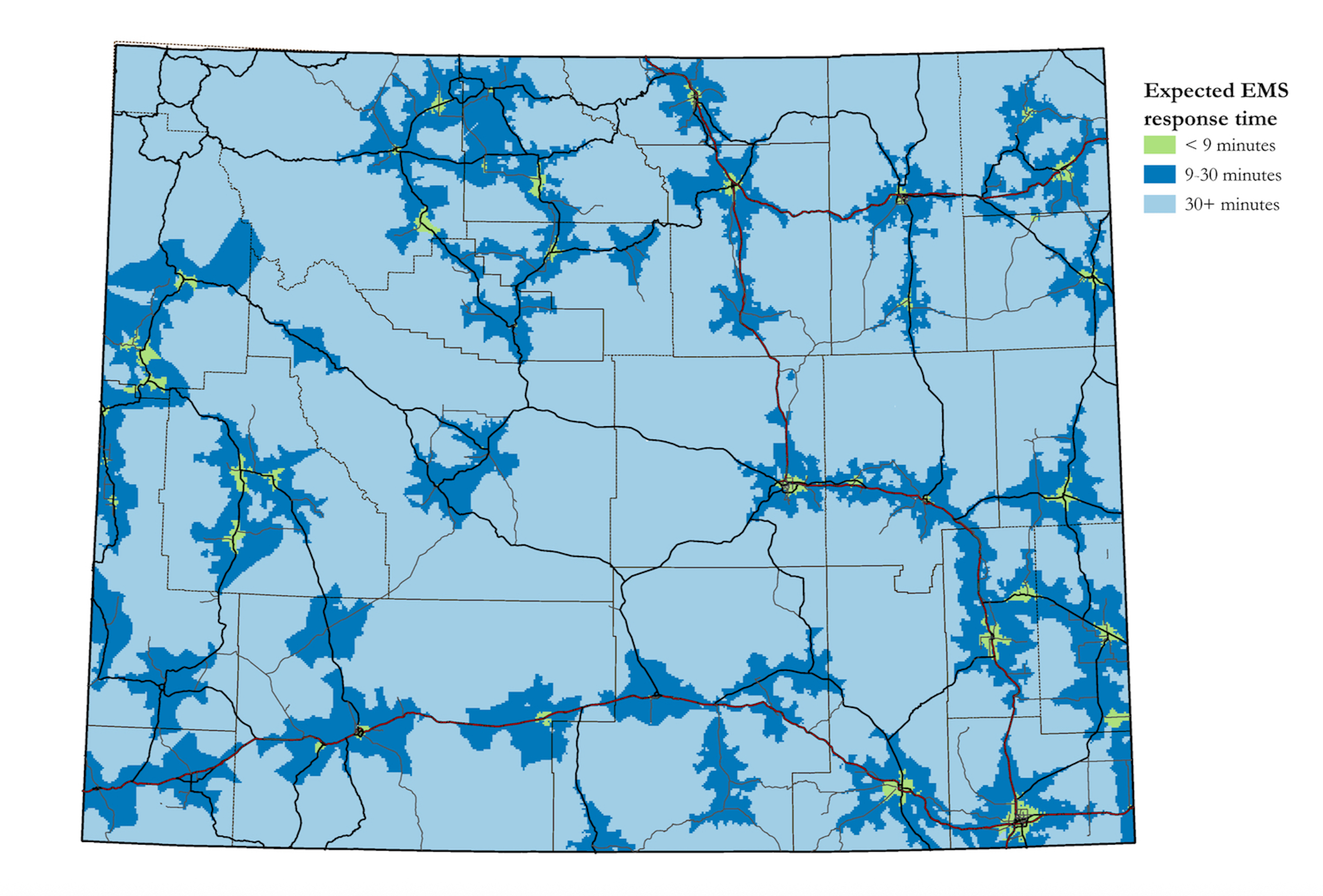
The authors for Wyoming’s application have stressed that the proposals are based on feedback from local residents and stakeholders. Despite that, healthcare challenges in the mostly frontier state go beyond doctor shortages, unsustainable EMS cost structures and hospital viability. Factors like low patient volume, few insurance plan providers and long transport times also complicate healthcare in the least populated state in the nation.
The same day Wyoming opened its request for proposal process, Healthy Wyoming announced it was launching the “Cost of Care Roadshow.” The nonprofit organization advocates for better healthcare access and affordability in Wyoming, which consistently ranks poorly in those categories. The roadshow will underline issues like maternity and behavioral healthcare gaps, Lowe of Healthy Wyoming said.
“Wyoming ranks in the top five or so of most expensive [health insurance] premiums in the country, and it just doesn’t sit right,” she said. “What I’m really trying to do [with the roadshow] is create a space for people to come together and to talk about that common concern about the cost of affording health care.”
A major pain point is recent jumps in health insurance premiums.
For example, Lowe said, in Wyoming the average monthly premium for a Bronze Affordable Care Act Marketplace plan sits at roughly $615, which equals about 9.6% of median household income.
“So that means families that are purchasing insurance on the marketplace are spending almost 10% of their income on health insurance premiums,” she said. “That’s wild, and it’s not sustainable for families that are trying to raise children and make ends meet.”
Health insurance affordability struggles are something Rep. Lloyd Larsen, R-Lander, hears loud and clear from constituents, he told WyoFile.
“It’s one of the top two concerns we have,” said Larsen, who co-chairs a newly formed legislative task force created to address that very issue. During its first meeting in June, the committee spent two days learning about the market forces that shape costs in Wyoming.
One concern that arose was the demographic of Wyoming residents that experienced the highest ACA price jumps in the country after the expiration of Enhanced Premium Tax Credits. They include working families that earn more than 400% of the federal poverty level — often entrepreneurs that don’t have access to a large pool for employers.
“These are professionals, attorneys, healthcare providers, CPAs … your small businessmen, that really are economic drivers in the community,” Larsen said.
According to a Wyoming health department presentation, ACA enrollment in Wyoming decreased from 46,643 in 2025 to 37,643 in 2026, a drop of 9,000.
While the Rural Transformation Program offers one-time funding aimed at stabilizing healthcare, Larsen told WyoFile, lawmakers on the task force are seeking long-term sustainability solutions.
The Legislature’s Health Insurance Affordability Task Force will reconvene on Aug. 13-14 in Cheyenne.
WyoFile is an independent nonprofit news organization focused on Wyoming people, places and policy.
This story was posted on July 9, 2026.
Ensure These Stories Are Told
Despite the challenges facing independent local journalism, what sustains us — and fills us with deep gratitude — is the loyal support of readers who believe our communities deserve accurate, trusted, and locally rooted news.
It is no exaggeration to say that we are here because of you. Every story we report, every local issue we follow, every public meeting we cover, and every community voice we lift up is made possible by readers who understand the value of an independent newspaper.
Your support does more than fund articles. It helps protect the independence that allows us to report honestly, ask important questions, and keep our community informed without fear or favor.
If you are able, please consider supporting the News Letter Journal by donating to our Unabridged Fund today. Whether your gift helps cover reporting time, printing costs, video, photography, editing, or distribution, every contribution helps keep local journalism strong in Wyoming.
All gifts are deeply appreciated. Your support helps ensure that local stories continue to be told, local decisions continue to be watched, and local voices continue to be heard.
Thank you for standing with independent community journalism.