


Why Didn’t Paul Just Stop Speaking of Christ?
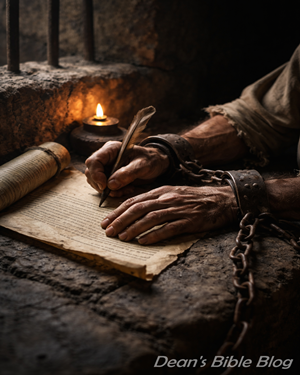
Why did Paul keep preaching Christ despite prison, beatings, and threats of death? This theological paper examines Paul’s understanding of obedience, suffering, stewardship, and union with Christ, showing why silence was never an option for him—and why it shouldn’t be for believers today.
Because for Paul, silence was never an option. Not morally, not spiritually, and not under any circumstance. Paul says it himself when he explains that preaching the gospel was not a choice he made but a necessity placed on him by God. “For if I preach the gospel, I have nothing to boast of, for I am under compulsion; for woe is me if I do not preach the gospel.” 1 Corinthians 9:16. That word “compulsion” matters. Paul did not view preaching Christ as a ministry lane or a calling he could step away from when the cost grew high. Silence would not have brought him peace. It would have brought judgment.
Paul understood exactly what silence would mean because obedience had already been settled in his life. After his conversion, he did not immediately step into public ministry. He withdrew, learned, and waited. But once Christ made His will clear, Paul never treated obedience as optional again. To stop speaking would have meant disobedience, and Paul feared that more than chains. That is why he could say without hesitation, “I was not disobedient to the heavenly vision.” Acts 26:19. That single sentence explains the direction of his entire life.
Paul also understood something many believers still struggle to accept. Suffering was not a sign that he was doing something wrong. From the very beginning, Christ told him otherwise. “I will show him how much he must suffer for My name’s sake.” Acts 9:16. Imprisonment, beatings, and rejection were not interruptions to his calling. They were part of the assignment. When Paul was jailed or threatened, he did not interpret it as God telling him to stop. He recognized it as confirmation that he was exactly where he was supposed to be.
Paul had also already settled the matter of his own life. “I have been crucified with Christ; and it is no longer I who live, but Christ lives in me.” Galatians 2:20. You cannot threaten a man who no longer considers his life his own. Prison loses its leverage. Death loses its terror. Silence loses its appeal. When self-preservation dies, obedience becomes straightforward.
Paul understood stewardship as well. “This is how one should regard us, as servants of Christ and stewards of the mysteries of God.” 1 Corinthians 4:1. A steward does not decide when the message is convenient. He delivers what he has been entrusted with, regardless of the cost. That is why prison did not shut Paul up. It simply relocated his pulpit. He preached to guards, wrote letters that still instruct the church today, and encouraged believers while chained to soldiers. As he himself testified, “My imprisonment in the cause of Christ has become well known throughout the whole praetorian guard.” Philippians 1:13.
Paul could have stopped speaking and avoided suffering, but that would have required him to deny the very reason he was alive. He tells us plainly why that was never an option. “For to me, to live is Christ and to die is gain.” Philippians 1:21. If living meant Christ, silence was impossible. If dying meant gain, threats were empty.
So the real question is not why Paul did not stop speaking. The real question is what would have convinced him that Christ was not worth the cost. Paul’s life answers that clearly. Nothing.
His faith was not convenient. It was costly. And every time, he counted Christ worth the cost. Now the question turns to us. Do we have that kind of faith? And if silence was never an option for Paul, why is it so easy for us?
______________________________________________________________________________
“What I write is not for everyone, but what I write is meant for someone.” – Dean Butler
