


HOLD FAST TO WHAT YOU HAVE
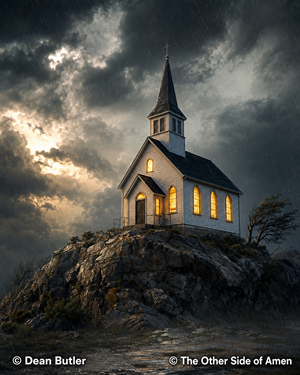
Even a faithful church must remain watchful. Christ calls His people to guard the truth, remain humble, bear spiritual fruit, and hold fast to Him.
If I were asked to write a letter to a church that seemed to be doing everything right, I would begin by thanking God for it.
I would thank God for sound teaching, sincere worship, faithful leadership, loving fellowship, prayer, generosity, service, and a desire to reach the lost. I would thank Him for every life changed by the truth of Christ and for every believer who quietly serves without seeking praise. These things should never be treated as ordinary. They are gifts from God, produced by His grace and sustained by His mercy.
But even a strong church must remain watchful.
The church at Ephesus was praised for its labor, perseverance, and ability to recognize false teachers. Christ said, “I know your deeds and your toil and perseverance” (Revelation 2:2). Yet He also said, “I have this against you, that you have left your first love” (Revelation 2:4).
That church was busy. It defended truth. It worked hard. Yet something had gone wrong in its heart.
A church may continue doing good things while its love for Christ quietly grows cold. It may protect sound teaching while losing tenderness, humility, and joy. It may stay busy in ministry while slowly forgetting why the ministry exists.
The church at Philadelphia received no direct rebuke, but Christ still warned it, “Hold fast what you have, so that no one will take your crown” (Revelation 3:11). Faithfulness yesterday does not guarantee faithfulness tomorrow. A church must keep guarding the truth, loving one another, praying earnestly, walking in holiness, and proclaiming the gospel.
One danger for many churches is that their programs become their identity.
Programs are not wrong. A church may have ministries for children, youth, families, missions, food, music, and community outreach. These things can be useful, but they must never become the thing the church is most proud of.
Some churches want to be known for their programs, their building, their music, their events, or the size of their attendance. But a church should be known first for its holiness and faithfulness to Christ.
The church was not called to impress the world with what it offers. It was called to show the world what Christ can produce in a people who belong to Him.
Programs may draw people, but programs cannot produce spiritual life. Jesus said, “Apart from Me you can do nothing” (John 15:5). Psalm 127:1 says, “Unless the Lord builds the house, they labor in vain who build it.”
A church may organize every part of ministry and still lack the power of God. It may have full calendars, large crowds, and a respected name, yet be weak in prayer, shallow in truth, and careless about sin.
Christ said to the church at Sardis, “You have a name that you are alive, and yet you are dead” (Revelation 3:1). That church had a reputation, but its reputation did not match reality.
God does not judge a church by its attendance, programs, buildings, or influence. He searches the heart.
The clearest evidence of spiritual life is not what a church builds, but what the Holy Spirit produces in its people.
“The fruit of the Spirit is love, joy, peace, patience, kindness, goodness, faithfulness, gentleness, self-control” (Galatians 5:22–23).
A church may have strong preaching and many programs, but if love, kindness, patience, faithfulness, and self-control are missing, something is badly wrong. The fruit of the Spirit is not decoration. It is evidence that the Spirit of God is at work.
A church may have people, property, programs, and a good reputation, but if the fruit of the Spirit is missing, it has lost the very evidence that Christ is living among His people.
Paul wrote, “Knowledge makes one conceited, but love edifies people” (1 Corinthians 8:1). Sound doctrine matters, but sound doctrine without love, humility, obedience, and compassion can become something a church defends without truly living.
A faithful church must remain humble. “Let the one who thinks he stands watch out that he does not fall” (1 Corinthians 10:12). Every strength a church has is the result of grace. No church has anything to boast about except Christ.
A faithful church must remain holy. Peter wrote, “Like the Holy One who called you, be holy yourselves also in all your behavior” (1 Peter 1:15). Sin that is ignored will not remain small. Pride, bitterness, worldliness, hidden compromise, and tolerated disobedience can slowly weaken the whole church.
A faithful church must remain prayerful. Programs can organize people, but only God can give life. Plans may fill the calendar, but prayer shows dependence on God.
A faithful church must remain outward-looking. Christ commanded His followers to “make disciples of all the nations” (Matthew 28:19). The church does not exist only to protect its own comfort. It is called to seek the lost, strengthen the weak, teach the truth, and carry the gospel beyond its walls.
Above all, a faithful church must remain close to Christ.
Its greatest strength is not its leadership, its programs, its reputation, or even its past faithfulness. Its strength is Christ Himself. He is the Head of the church, the Chief Shepherd, and the One who walks among His people.
A church should not be known first for what it offers, but for what Christ is producing in its people.
Do not merely protect what you have built.
Hold fast to Christ.
________________________________________________________________________
“What I write is not for everyone, but what I write is meant for someone.” – Dean Butler
This work may be shared for ministry or personal use, but please credit the author when doing so. © Dean Butler | The Other Side of Amen | All rights reserved.
